Recevez chaque mois une boîte à idées directement dans votre boîte aux lettres électronique !
S'abonner
Si vous observez attentivement les principaux jeux casual, de réflexion et de casino, vous remarquerez que la plupart d'entre eux proposent une fonctionnalité « tirelire » ; d'ailleurs, pour bon nombre d'entre eux, cette fonctionnalité figure parmi les achats intégrés les plus vendus.
Dans cet article, nous allons examiner en détail les « tirelires » ( ) dans les jeux vidéo, leur fonction, leurs différents types et leur impact sur la monétisation des jeux. Nous présenterons également quelques exemples d’implémentation de ces tirelires tirés de certains des plus grands titres de jeux mobiles au monde, tels que Township et Gardenscapes.
Commençons par les bases.
👀 Lecture connexe : Jouer et gagner de l'argent : guide du développeur sur les achats intégrés pour la monétisation des jeux mobiles
Dans les jeux vidéo, les tirelires remplissent la même fonction que dans la vie réelle : elles servent à stocker de l'argent. En jouant, les joueurs gagnent généralement une forme de monnaie (comme des pièces ou de l'or, selon l'univers du jeu). Lorsque le jeu propose cette fonctionnalité, une petite partie des gains des joueurs est versée dans la tirelire, qui se remplit au fil du temps.
Une fois que la tirelire contient suffisamment d'argent, les joueurs peuvent l'ouvrir. Mais, au lieu de la casser comme on le ferait avec une vraie tirelire, les utilisateurs doivent effectuer une « achat intégré » pour débloquer leurs gains.
Tout comme les offres promotionnelles, les packs et les Battle Pass, les tirelires intégrées au jeu sont conçues pour offrir aux joueurs un meilleur rapport qualité-prix que les autres produits proposés dans la boutique standard.
Dans de nombreux jeux, le prix des tirelires varie entre 1,99 $ et 4,99 $, même si elles ne représentent pas une part importante des recettes issues des achats intégrés d'un jeu classique.
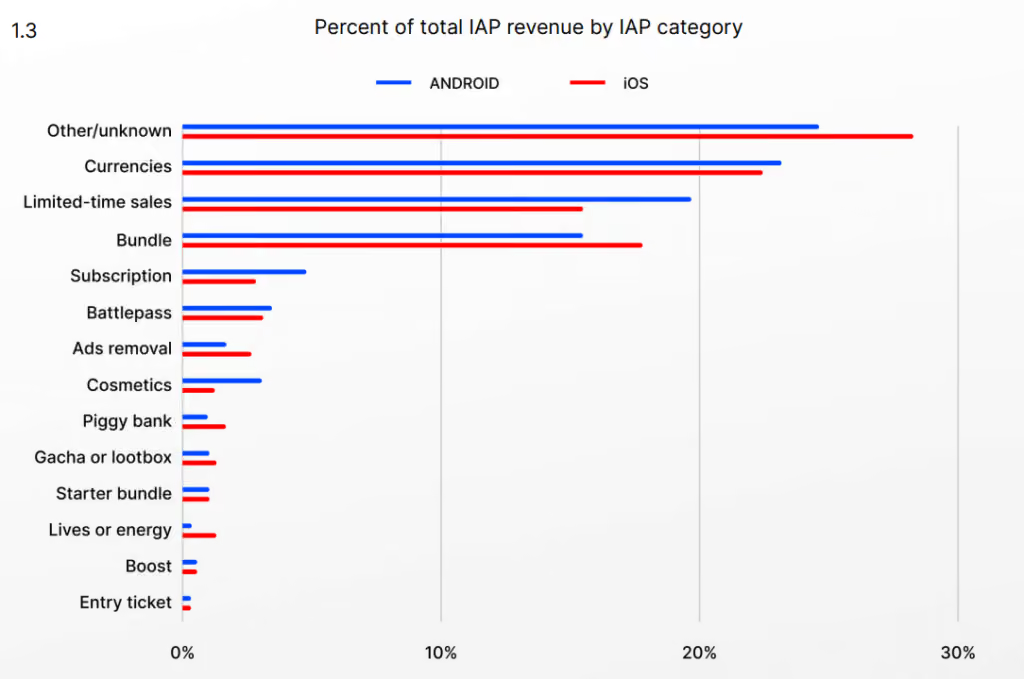
Selon un rapport d'Unity, les tirelires occupent la 9e place parmi les catégories d'achats intégrés en termes de pourcentage du chiffre d'affaires total. Elles se classent ainsi derrière des fonctionnalités telles que les devises, les « battle passes » et la suppression des publicités, mais devant les « gacha », les packs de démarrage et les vies.
Cependant, cette part plus modeste des revenus issus des achats intégrés ne doit pas vous dissuader d'intégrer des tirelires comme option de monétisation si cela correspond au type de votre jeu, car les tirelires ne sont pas destinées à constituer une source de revenus principale pour les jeux, mais plutôt une source de revenus supplémentaire offrant une petite valeur ajoutée aux joueurs qui choisissent de les utiliser.
En matière de monétisation, le timing est primordial. Lorsque les joueurs commencent à jouer à un jeu, une offre de « tirelire » ne devrait pas figurer parmi les premières offres d'achats intégrés qu'ils rencontrent.
L'introduction de la tirelire doit intervenir une fois que le joueur s'est familiarisé avec les mécanismes du jeu et son système monétaire, c'est-à-dire lorsqu'il a atteint un certain niveau d'engagement et d'immersion dans le jeu. En tant que développeur de jeux mobiles, vous devez attendre que les joueurs s'investissent pleinement dans le jeu et commencent à réfléchir à des moyens d'accumuler davantage de monnaie avant d'introduire les tirelires.
Comme les tirelires ne constituent généralement pas le premier achat d'un joueur, vous devriez vous attacher à rendre cette fonctionnalité attrayante pour les joueurs qui dépensent déjà de l'argent, plutôt que de la proposer comme offre de conversion pour les nouveaux joueurs.
La popularité des tirelires est profondément ancrée dans la nature humaine, et l'attrait qu'elles exercent dans les jeux s'explique par différents facteurs psychologiques.
Dès que les joueurs voient une tirelire se remplir d'argent, ils comprennent immédiatement de quoi il s'agit, sans avoir besoin de règles ni d'explications. L'interaction avec ce mécanisme semble donc à la fois intuitive et concrète.
Au fur et à mesure que les joueurs progressent dans le jeu, la récompense offerte par la tirelire gagne progressivement en valeur. Comme cela résulte des efforts du joueur, celui-ci la perçoit comme quelque chose qu’il a activement mérité plutôt que simplement reçu de manière passive. Cela crée un effet psychologique appelé « effet de dotation » : la tendance à accorder plus de valeur à quelque chose simplement parce qu’on en est propriétaire.
À mesure que la tirelire se remplit de billets et que le jeu affiche cette progression, les joueurs peuvent éprouver un fort sentiment d'accomplissement. Il s'agit d'un processus gratifiant qui incite certains joueurs à effectuer l'achat et à accéder à leurs économies.
Hexa Sort est un jeu hybride et décontracté à succès développé par Lion Studios. Dans ce jeu, les joueurs doivent classer des tuiles hexagonales par couleur sur un plateau ; celles-ci fusionnent ensuite et disparaissent. Le jeu génère des revenus grâce à une combinaison de publicités et d'achats intégrés, notamment une fonctionnalité « tirelire ».
La tirelire « Hexa Sort » apparaît dès que les joueurs atteignent le niveau 7. À partir de ce niveau, elle commence à se remplir d'une partie des gains obtenus en jouant, ce qui est indiqué par une barre de progression. La tirelire ne devient disponible à l'achat que lorsque les joueurs atteignent un objectif d'épargne défini.
Tant que cela n'est pas le cas, le jeu ne dévoile pas son prix.
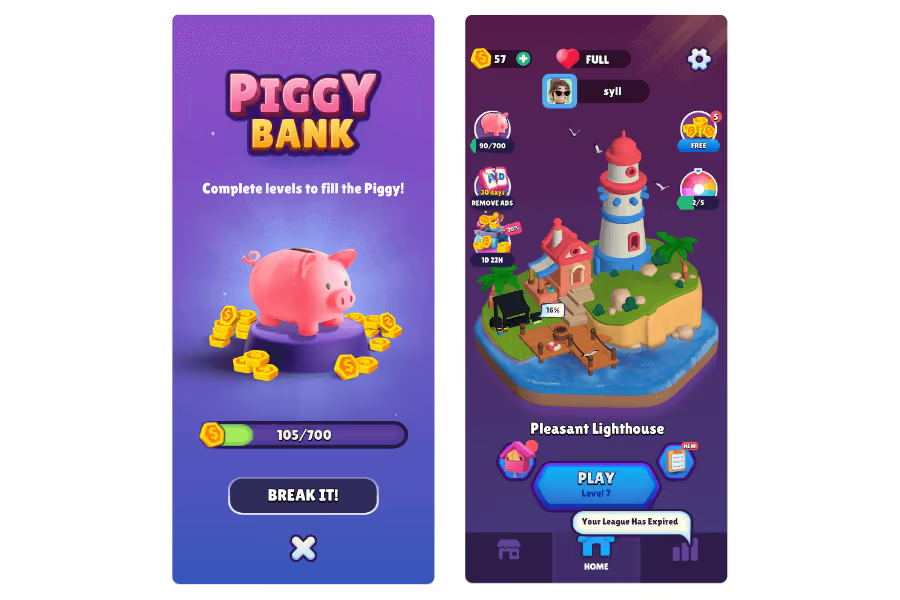
Il est intéressant de noter que, malgré son prix relativement élevé (4,99 $), la tirelire occupe la 3e place parmi les achats intégrés les plus populaires de ce jeu (Sensor Tower, iOS, États-Unis). Ce résultat est supérieur à la moyenne pour ce type d'offre et montre que le développeur a trouvé le juste équilibre entre le coût et la valeur perçue par les joueurs.
Playrix intègre des fonctionnalités de tirelire dans la quasi-totalité de ses jeux, et Gardenscapes ne fait pas exception. Cependant, dans ce jeu de type « match-3 », celles-ci se présentent sous une forme légèrement différente.
Au lieu d'une tirelire classique, les joueurs mettent de l'argent de côté dans une fonctionnalité appelée « Réserve d'or ». Bien que la forme soit différente, le principe reste le même.
En terminant des niveaux de type « match-3 », les joueurs récoltent de l'or, et une partie de ces gains est versée dans leur coffre-fort.
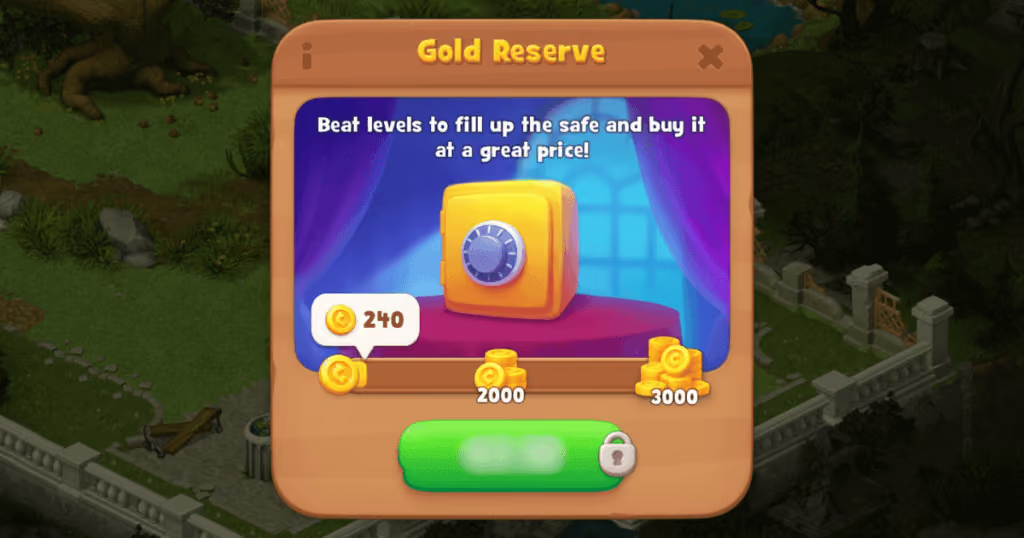
Dès qu'ils ont atteint un certain montant d'or, les joueurs peuvent acheter la « Réserve d'or » au prix de 2,99 $. Contrairement à Hexa Sort, Gardenscapes indique d'emblée le prix aux joueurs.
Cette fonctionnalité est également très appréciée des joueurs. Selon Sensor Tower, la « Gold Reserve » est le troisième achat intégré le plus vendu du jeu (iOS, États-Unis).
Difficile d'imaginer un contexte plus adapté à une fonctionnalité d'épargne que les jeux de casino, où tout tourne autour de l'argent.
Slotomania, le jeu de casino à succès de Playtika, propose un emplacement original pour la tirelire.
Pour illustrer la progression des joueurs, le jeu les emmène sur une route menant à « Slotocity ». Au fur et à mesure qu’ils avancent dans le jeu, ils débloquent différentes fonctionnalités le long du parcours. Lorsqu’ils atteignent le niveau 25, ils débloquent la deuxième fonctionnalité du parcours : une tirelire. À partir de ce moment-là, une partie des gains remportés à la machine à sous est versée sur leur compte d’épargne.
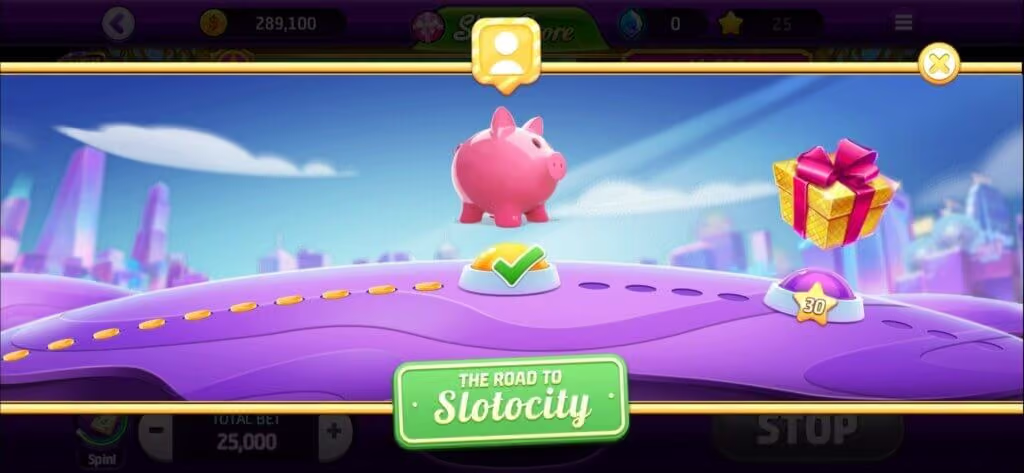
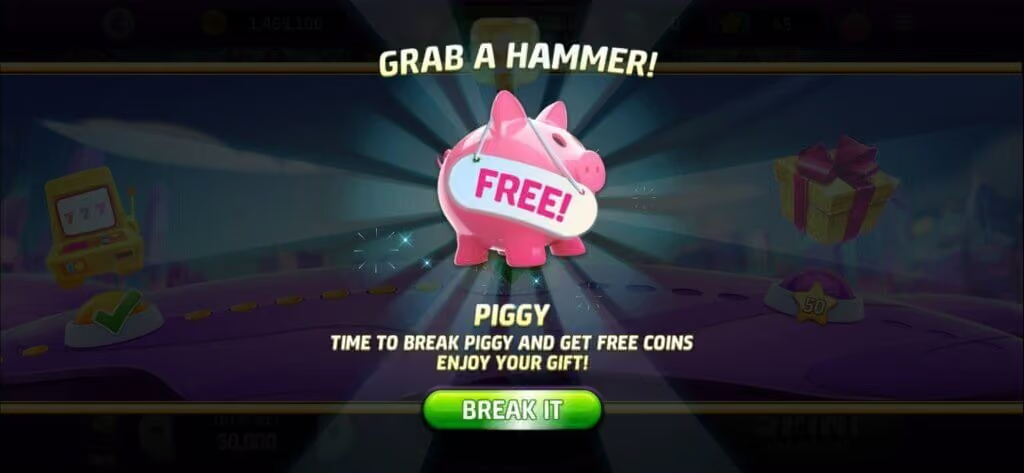
Dans ce jeu, les joueurs peuvent acheter la tirelire dès son apparition, au prix relativement modique de 1,99 $. Plus ils attendent et continuent à jouer, plus ils économisent grâce à elle. Mais il y a un rebondissement. Une fois que les joueurs atteignent le niveau 45, le jeu leur offre la tirelire gratuitement. Par cette stratégie, le développeur met en avant la valeur de la tirelire, incitant ainsi les joueurs à l'acheter plus tard dans le jeu.
À quoi faut-il prêter attention lorsque l'on intègre une tirelire dans son jeu, et comment s'assurer qu'elle s'inscrit dans le cadre de sa stratégie globale de monétisation ?
Voici quelques points à garder à l'esprit tout au long de ce processus.
Même si leur principe de base reste toujours le même, les tirelires offrent de nombreuses possibilités créatives. Vous pouvez, par exemple, créer des tirelires sur le thème d' événements importants du jeu. Une autre option consiste à créer plusieurs tirelires permettant aux joueurs de collecter différents objets (par exemple, de la monnaie, des boosters ou des cartes).
La forme de l'offre est également variée : outre la tirelire traditionnelle, il peut s'agir d'un coffre-fort, d'un coffre au trésor ou d'une chambre forte.
Ce ne sont là que quelques options parmi lesquelles vous pouvez choisir lorsque vous concevez une fonctionnalité de « tirelire » pour votre jeu. Veillez donc à explorer différentes options afin de trouver celle qui correspond le mieux à votre expérience de jeu et à votre marque, afin de proposer une offre plus attrayante à vos joueurs.
Définir des règles et des plafonds pour votre tirelire
Comme le montrent les exemples ci-dessus, les tirelires dans le jeu peuvent apparaître dans différentes conditions et circonstances. Voici quelques-uns des éléments que le développeur doit déterminer lors de l'intégration d'une tirelire :
Lorsqu’on intègre des tirelires dans les jeux, il est important de réfléchir à la manière dont elles s’intègrent dans la stratégie globale de monétisation, et l’équilibre est ici essentiel. Si elles sont correctement mises en œuvre, les tirelires doivent venir compléter, et non éclipser, les autres fonctionnalités d’achats intégrés, les publicités et les abonnements.
Pour éviter qu’une tirelire ne cannibalise d’autres fonctionnalités d’achats intégrés, les récompenses qu’elle offre doivent être attrayantes, sans pour autant être trop généreuses. Quant au prix, il est primordial que les joueurs considèrent l’offre comme avantageuse.
En règle générale, il est recommandé de rester dans une fourchette de prix comprise entre 1,99 $ et 4,99 $, le prix final étant déterminé à l'issue de tests et d'optimisations.
👀 Lecture connexe : Guide de la monétisation des jeux mobiles à l'intention des éditeurs
Nous espérons que ce guide vous aura aidé à mieux comprendre le rôle et l'impact des tirelires dans les jeux, ainsi que la manière dont elles peuvent constituer une offre d'achats intégrés efficace à proposer aux joueurs si l'écosystème de votre jeu s'y prête.
Vous souhaitez lire d'autres articles sur les stratégies de monétisation des jeux mobiles à succès ? N'oubliez pas de vous abonner à notre newsletter!