26 mars 2026
Recevez chaque mois une boîte à idées directement dans votre boîte aux lettres électronique !
S'abonner.avif)
En matière de méthodes éprouvées pour fidéliser les joueurs dans les jeux mobiles, il existe une stratégie qui, au fil du temps, est devenue incontournable dans tous les genres de jeux : les récompenses de connexion quotidiennes. Mais pourquoi la quasi-totalité des jeux mobiles les plus populaires offrent-ils des récompenses de connexion quotidiennes à leurs joueurs ? Quel est l'impact de cette stratégie sur les performances du jeu ? Et quelles sont les meilleures façons de mettre en œuvre cette fonctionnalité ?
L'octroi de bonus pour les connexions quotidiennes (voire pour l'enchaînement de connexions) est une stratégie éprouvée visant à fidéliser les joueurs aux jeux mobiles et à réduire leur taux de désabonnement. On la retrouve dans différents genres et types de jeux, et elle peut prendre de nombreuses formes, allant de simples récompenses en gemmes à des systèmes plus complexes liés aux connexions consécutives.
Dans cet article, nous passerons en revue les principaux types de récompenses de connexion quotidiennes, nous donnerons des exemples tirés de jeux populaires et nous aborderons les facteurs à prendre en compte pour intégrer cette tactique d'engagement dans les jeux mobiles à votre propre stratégie LiveOps.
👀 Lecture connexe : Fidélisation des joueurs de jeux mobiles : le guide complet
Les récompenses de connexion quotidiennes constituent une stratégie d'engagement utilisée dans les jeux mobiles pour inciter les joueurs à revenir chaque jour en échange d'une petite bonus. L'objectif principal de ces récompenses est d'encourager les joueurs à se connecter au jeu tous les jours, voire à établir une série de connexions en se connectant sans interruption au fil du temps.
La procédure est simple : connectez-vous → accédez à la rubrique « Récompenses quotidiennes » → récupérez votre récompense.
Les développeurs utilisent cette fonctionnalité pour créer une boucle d'habitude qui incite les joueurs à revenir régulièrement au jeu, ce qui, si elle s'avère efficace, permet à terme d'améliorer les indicateurs d'engagement tels que le nombre d'utilisateurs actifs quotidiens (DAU), la fidélisation et les taux de rétention au fil du temps.
Bien sûr, la conception et la mise en place de cette fonctionnalité ne visent pas uniquement à améliorer les chiffres d'utilisateurs actifs quotidiens (DAU) et mensuels (MAU) ; l'objectif est que les joueurs viennent récupérer leur récompense, mais qu'ils restent ensuite dans le jeu et continuent à jouer (voire à dépenser). Pour y parvenir et éviter les micro-sessions, il est important de mettre en place cette fonctionnalité de manière stratégique et de l'équilibrer soigneusement avec le reste du jeu.
Il existe différentes façons d'intégrer des récompenses de connexion quotidiennes dans un jeu. Nous distinguons notamment ces récompenses en fonction de leur format calendaire et de la manière dont elles gèrent les jours manqués. Voyons donc quelles sont les options qui s'offrent à vous.
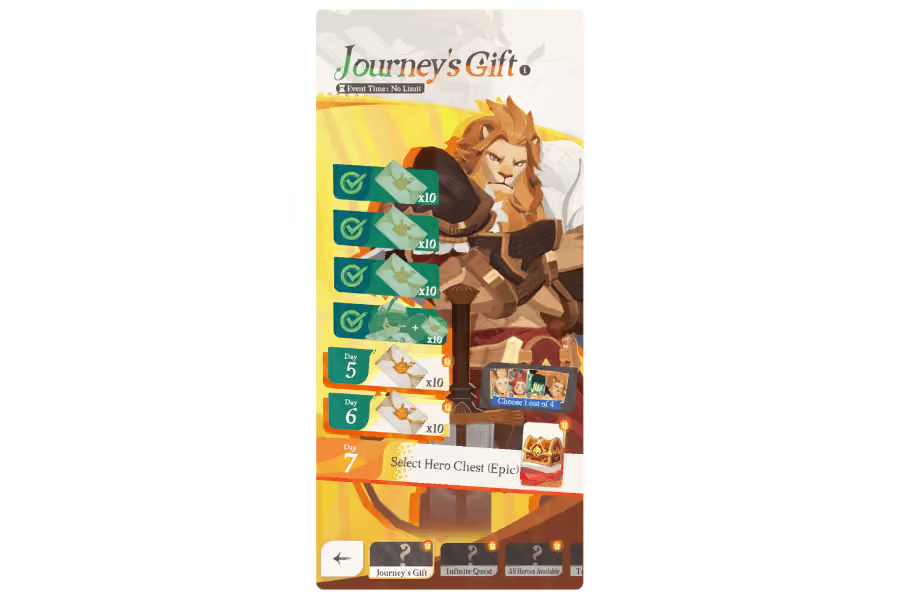
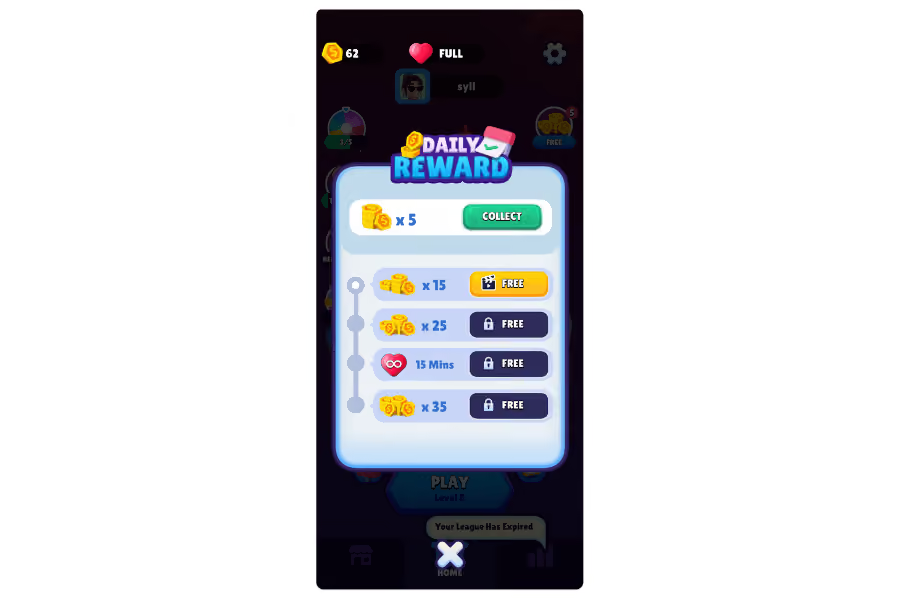
Dans la plupart des jeux mobiles, on retrouve un système simple de récompenses quotidiennes de connexion, dans lequel les joueurs reçoivent des récompenses fixes pour chaque jour où ils se connectent, ainsi que pour les jours à venir. Par exemple, un calendrier proposant des récompenses pour les 7, 14 ou 30 jours à venir.
Ce calendrier est très répandu car il est simple à mettre en œuvre et offre aux joueurs une vue d'ensemble claire des points.
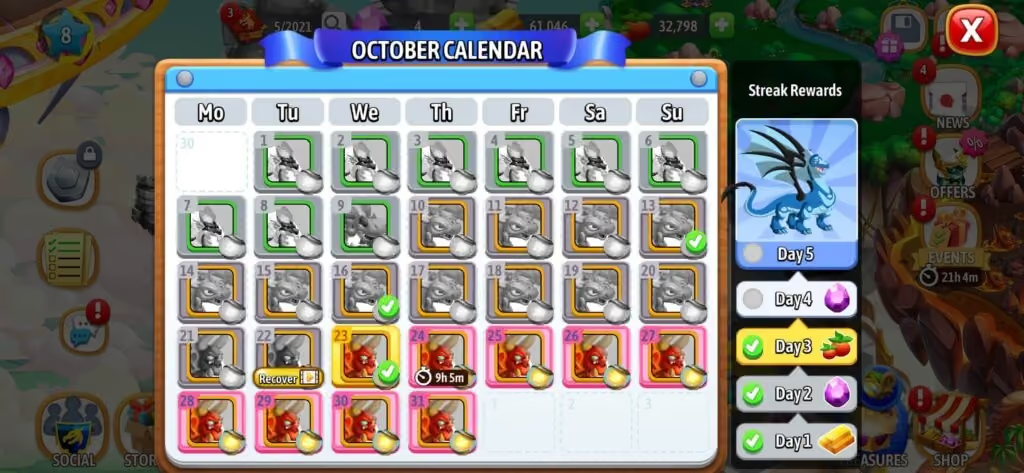
Un calendrier en temps réel permet d'aligner les récompenses quotidiennes sur la date et l'heure réelles. Par exemple, si nous sommes en octobre, les joueurs peuvent consulter le calendrier d'octobre et découvrir toutes les récompenses qu'ils peuvent réclamer d'ici la fin du mois.
Ce type de calendrier est principalement utilisé dans les jeux « mid-core » où les joueurs apprécient cette immersion supplémentaire. C'est également l'occasion de faire référence aux saisons, aux jours fériés et à d'autres occasions spéciales. Par exemple, en octobre, il est logique de proposer une récompense spéciale pour Halloween.
Un calendrier basé sur les événements associe des récompenses quotidiennes à des événements spécifiques du jeu ou à des campagnes spéciales (par exemple, des événements à durée limitée, la sortie de nouveaux personnages, des mises à jour du gameplay).
Les calendriers liés à des événements apparaissent généralement en parallèle du format standard de connexion quotidienne et offrent souvent des récompenses plus intéressantes. Comme ces calendriers ne sont disponibles que pendant une période limitée, les développeurs les affichent généralement en premier et leur accordent temporairement la priorité par rapport au calendrier standard afin d'attirer l'attention des joueurs.
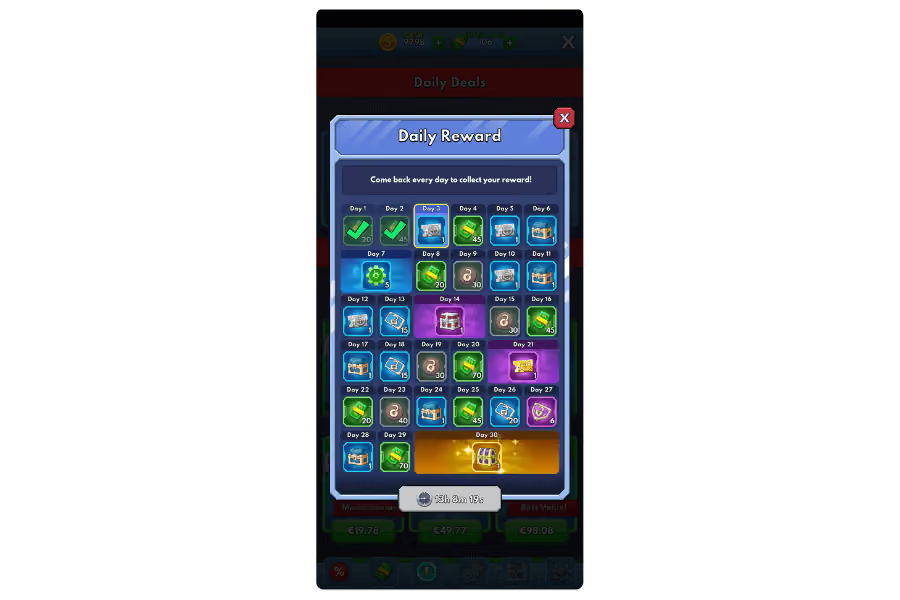
Dans ce système de récompenses quotidiennes très répandu, les joueurs récupèrent leurs récompenses en fonction du nombre de jours où ils se sont connectés. Si un joueur manque une journée, c'est comme si cette journée n'avait jamais existé.
Par exemple, si un joueur réclame la récompense du jour 1, ne se connecte pas le jour 2 et se reconnecte le jour 3, il recevra la récompense du jour 2. Cette méthode est idéale pour les jeux occasionnels, où l'objectif est de maintenir l'intérêt des joueurs sans les pénaliser trop sévèrement s'ils manquent un jour.
Ce type de système de récompenses de connexion attribue automatiquement des récompenses pour les jours manqués, même si les joueurs ne se sont pas connectés. Ainsi, lorsqu'un joueur revient après avoir manqué quelques jours, il peut tout de même récupérer toutes les récompenses qu'il a manquées les jours précédents.
Comme cette méthode permet de réduire la nécessité de se connecter quotidiennement, les développeurs y ont peu recours. De par sa nature, elle convient particulièrement aux jeux où les joueurs évoluent à leur propre rythme, comme les jeux « idle » qui offrent des récompenses « AFK ».
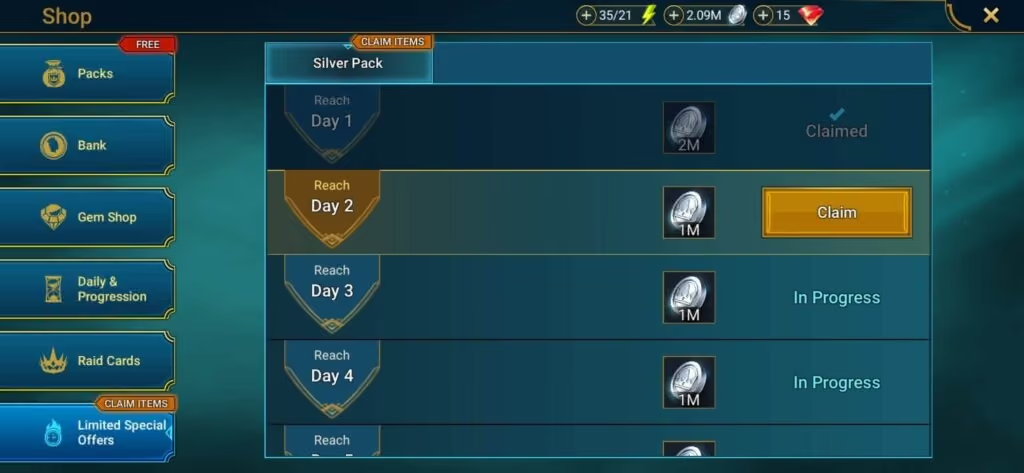
Dans ce système, les joueurs ne reçoivent des récompenses que les jours où ils se connectent ; s'ils manquent un jour, la récompense correspondante est définitivement perdue. Par exemple, si un joueur se connecte le lundi et ne revient pas avant le vendredi, il ne recevra pas les récompenses des jours intermédiaires.
Avec ce modèle, les développeurs cherchent à encourager les connexions régulières. Ce modèle prévoit une légère « sanction », tout en permettant aux joueurs de conserver leur série de récompenses. Il est principalement utilisé dans les jeux « mid-core », où les joueurs sont plus enclins à se connecter régulièrement et à réagir positivement à ce type de renforcement.
Le système de réinitialisation ramène la progression au jour 1 si un joueur manque ne serait-ce qu'un seul jour. Par exemple, si des joueurs se connectent cinq jours d'affilée mais manquent le 6e jour, ils seront pénalisés et devront repartir de zéro.
En raison de sa nature exigeante, ce modèle est aujourd'hui rarement utilisé. Plutôt que de pénaliser les joueurs et de les forcer à s'engager, la plupart des développeurs cherchent désormais à créer des expériences positives et gratifiantes pour leurs joueurs.
Choisir le format de récompenses quotidiennes le plus adapté n'est qu'une partie du travail à accomplir. Voici quelques autres mesures que vous pouvez prendre pour optimiser l'efficacité de votre système de récompenses quotidiennes.
Les jeux mobiles proposent généralement des récompenses quotidiennes à la fin de l'expérience utilisateur initiale (FTUE). À ce stade, les joueurs comprennent le fonctionnement du jeu et savent comment tirer parti des récompenses quotidiennes. Lorsqu'ils découvrent cette fonctionnalité dans le cadre de la FTUE, ils apprennent à quoi s'attendre et comment y accéder, ce qui leur permet de prendre très tôt l'habitude de l'utiliser.
Les développeurs ont différentes façons de présenter les récompenses quotidiennes : certains utilisent des fenêtres contextuelles, d'autres les intègrent dans le didacticiel, tandis que d'autres encore laissent les joueurs les découvrir par eux-mêmes. Par exemple, les joueurs peuvent trouver ces récompenses sous forme d'icônes sur l'écran d'accueil ou dans une section de la boutique du jeu.
Toutes ces approches peuvent donner de bons résultats : le choix dépend de l'importance que vous souhaitez accorder à la fonctionnalité des récompenses quotidiennes.
Les récompenses quotidiennes ne doivent pas être trop généreuses. Elles doivent être modestes et régulières, tout en restant suffisamment attrayantes pour inciter les joueurs à les réclamer chaque jour. Ces récompenses peuvent prendre différentes formes : monnaie forte ou faible du jeu, bonus, équipement, etc.
Il existe différentes façons de répartir ces récompenses. Par exemple, de nombreux développeurs commencent le calendrier par des récompenses modestes dont la valeur augmente au fil du temps. Une autre approche courante est la méthode « en zigzag », qui consiste à alterner des récompenses de grande valeur avec des récompenses plus modestes.
Les joueurs qui réclament régulièrement leurs récompenses de connexion quotidiennes aiment manifestement accumuler des récompenses dans le jeu. Cela en fait le public cible idéal pour les publicités rémunérées. Les développeurs intègrent souvent des publicités vidéo rémunérées aux récompenses quotidiennes. Par exemple, les utilisateurs peuvent regarder une publicité vidéo pour doubler leur récompense quotidienne ou gagner un bonus supplémentaire bonus.
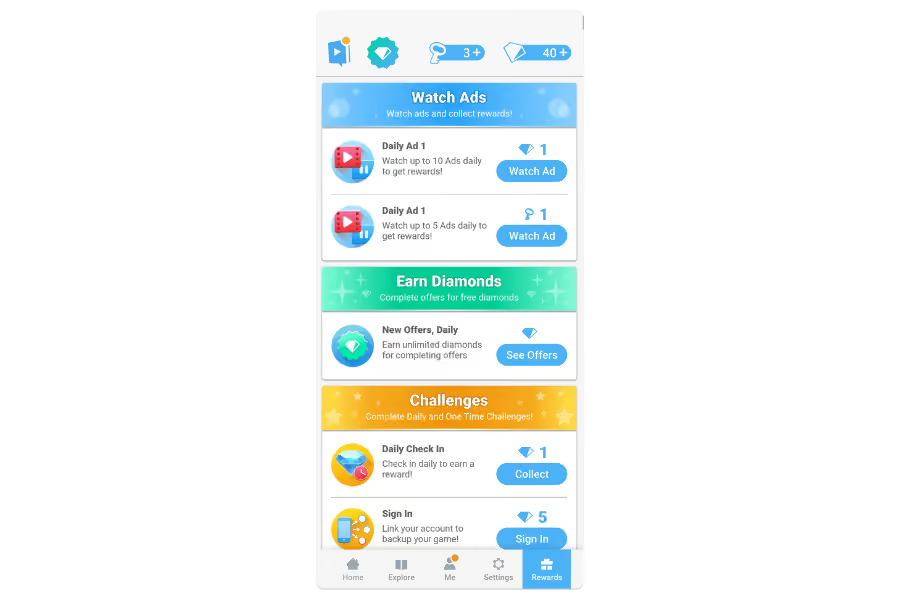
Les publicités « offerwall » constituent un autre type de publicités rémunérées pouvant accompagner les récompenses de connexion quotidiennes. Par exemple, si le jeu propose des récompenses quotidiennes dans une section dédiée intitulée « Récompenses », c’est également un excellent endroit pour présenter aux joueurs un mur d’offres intégré au jeu.
👀 Lecture connexe : Les « offerwalls » expliqués : un modèle de monétisation éprouvé pour les applications mobiles
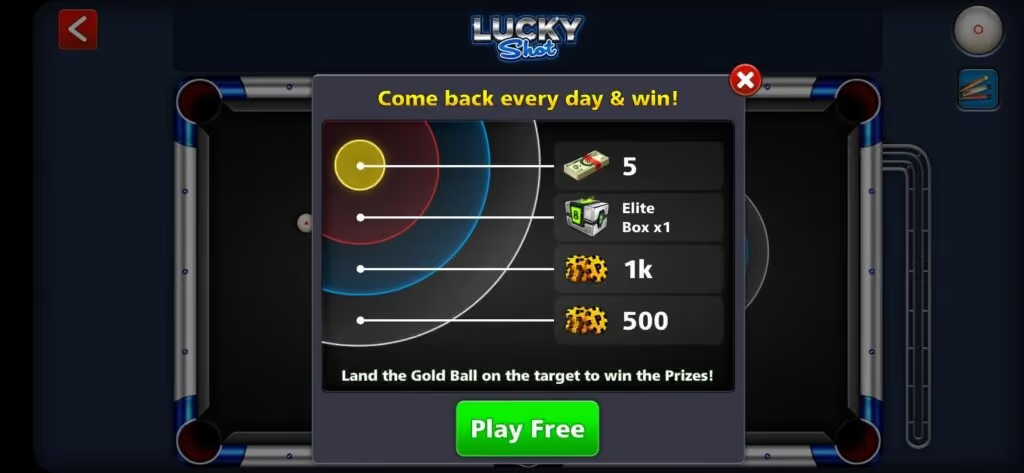
Les récompenses quotidiennes pour connexion ne doivent pas nécessairement suivre la procédure classique consistant à « voir et réclamer ». Certains développeurs pimentent le processus d'obtention des récompenses en tirant parti de fonctionnalités interactives telles que :
Tout comme pour les récompenses quotidiennes habituelles, les joueurs ne peuvent accéder à ces fonctionnalités qu'une seule fois par jour. Cette stratégie rend le système de récompenses plus dynamique, ce qui permet de maintenir l'intérêt des joueurs et d'apporter une touche de suspense aux récompenses quotidiennes.
Vous voulez vous assurer que vos joueurs ne se connectent pas uniquement pour récupérer leurs récompenses avant de disparaître ?
De nombreux développeurs tentent de renforcer l'engagement de leurs joueurs en associant des récompenses de connexion quotidiennes à des missions, des tâches ou des quêtes quotidiennes.
Lorsque les joueurs se connectent pour récupérer leurs récompenses de connexion quotidiennes, ils peuvent également consulter les missions quotidiennes disponibles. En accomplissant ces missions, ils gagnent une récompense « bonus » en plus de leur récompense de connexion quotidienne.
En associant des récompenses quotidiennes à des missions quotidiennes, les développeurs peuvent allonger la durée des sessions, favoriser l'adoption d'habitudes engageantes et renforcer la fidélisation globale des joueurs. Cette stratégie, relativement récente et en vogue, est considérée comme l'évolution du format classique des récompenses de connexion quotidiennes.
Les récompenses de connexion quotidiennes constituent une stratégie éprouvée pour fidéliser les joueurs aux jeux mobiles. Comme vous pouvez le constater, il existe de nombreuses façons de mettre en œuvre cette fonctionnalité ; veillez donc à tester différentes approches afin de trouver celle qui vous convient le mieux.
Vous souhaitez en savoir plus sur les fonctionnalités populaires de fidélisation et de monétisation des jeux mobiles ? Abonnez-vous à notre newsletter pour rester informé de la sortie de nos prochains guides !